Pottali
Herbal Poultice TherapyWarm herbal bundles are applied to the body to ease stiffness and soothe tired muscles.
Ayurveda looks at the whole person. After your consultation, the doctor chooses the therapies, diet and lifestyle guidance that suit your constitution and needs. Not every therapy is right for everyone.
YOUR NEXT STEP
Choose a starting point. The doctor can help you decide what may suit you after an individual assessment.
PERSONALISED AYURVEDIC CARE
Kayachikitsa is Ayurveda's branch of internal medicine. Dr. Patil considers your health concern, history and everyday routine before discussing a care plan with you.
Book a consultationTHERAPIES CHOSEN FOR YOU
Panchakarma includes therapies that may be recommended after a doctor's assessment. Browse the options, then discuss which—if any—may suit your needs.
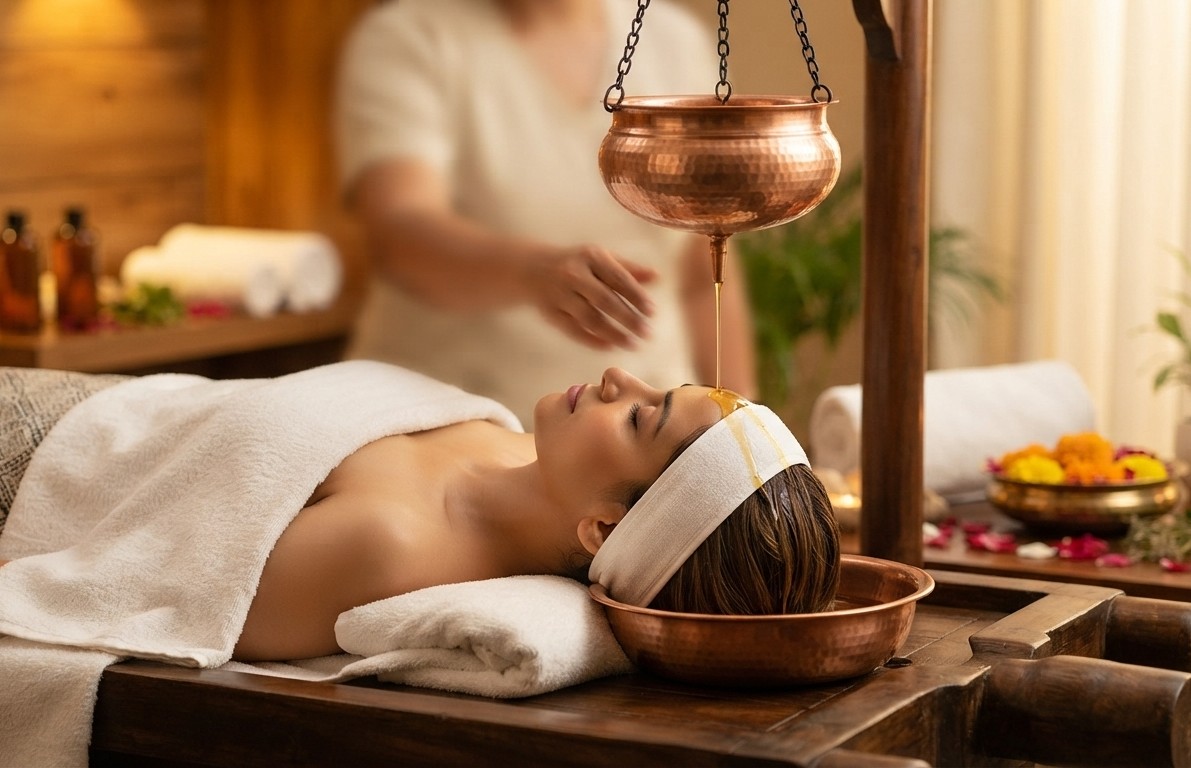
See Panchakarma therapiesLie back, close your eyes and let a slow stream of warm oil flow across your forehead.
One of the best known Ayurvedic therapies, chosen to calm a busy mind and support restful sleep. Your doctor decides if it suits you.
Choose where you want relief. Tap any card to see what happens during the therapy.
Warm herbal bundles are applied to the body to ease stiffness and soothe tired muscles.
A steady stream of warm medicated liquid is poured over the body for deep relaxation.
A calming therapy that nourishes and relaxes the eyes, often chosen after long screen hours.
A brisk massage with dry herbal powders to stimulate the skin and body.
A rhythmic massage with warm herbal oils, used for relaxation and general wellbeing.
A gentle herbal steam therapy that induces sweating and loosens stiffness.
Warm oil flows slowly over the forehead to calm the mind and support restful sleep.
Warm medicated oil is poured over the body while it is gently massaged.
Warm oil is held over the lower back to ease stiffness and discomfort.
Warm oil is held around the knee to support comfort and movement.
Warm oil is held over the neck and upper back to ease tension.
Medicated oil drops are applied to the nasal passage, chosen for head, neck and sinus comfort.
A classical Panchakarma therapy, given only after the doctor's assessment.
A classical Panchakarma procedure considered only in selected cases after individual assessment.
A soothing massage of the feet with herbal oil for relaxation and better sleep.
A relaxing oil massage of the head, neck and shoulders to release tension.
A traditional Ayurvedic preparation given to children to support general wellbeing, as advised by the doctor.
Other Ayurvedic therapies chosen after consultation, to suit your constitution and needs.
Ayurvedic care may help support these areas of health. Your plan is always individual.
Ayurveda describes the body through three energies called doshas: Vata, Pitta and Kapha. Everyone has all three, in a personal balance known as Prakriti. Tap a card to turn it over.
Most people are a mix of two or three. This is only an introduction: the doctor assesses your Prakriti in person during your consultation, and it cannot be worked out from a card.
We recommend booking so the doctor can give you enough time. Use the form, call or WhatsApp.
The doctor listens to your concerns, asks about your routine, diet and health history, and assesses your Prakriti before suggesting a plan.
Kayachikitsa is the branch of Ayurveda that deals with internal medicine, looking at the whole person rather than a single symptom.
Panchakarma is a group of cleansing and balancing therapies. Which therapies suit you is decided by the doctor after assessment.
Panchakarma is arranged in three stages: Purvakarma (preparation), Pradhanakarma (the main therapy) and Paschatkarma (aftercare with diet and lifestyle guidance). Your doctor plans each stage for you.
Prakriti is your natural body constitution. Ayurveda describes it as a personal balance of three energies called doshas: Vata, Pitta and Kapha. The doctor assesses it during your consultation.
Please do not stop or change any medicine without speaking to your treating doctor. Tell us about all medicines you take.
No. Plans are individual and depend on your constitution, concerns and lifestyle.